Repair or Replace? 7 Signs Your Boiler Needs Upgrading
Nobody wants to replace a boiler too early. Nobody wants a breakdown in January either. Knowing the signs your boiler needs replacing helps you plan ahead. This guide covers seven warning signs and a simple rule for deciding.
The short answer
Repair your boiler if it is under ten years old and the fault is minor. Replace it if it is over 12 to 15 years old and breaks down often. Replace it too if one repair costs more than half a new boiler. Most boilers last 10 to 15 years with regular servicing.
Repair or replace: a quick guide
| Situation | Best option |
|---|---|
| Under 10 years old, first fault, parts available | Repair |
| Still under warranty | Repair through the manufacturer |
| 10 to 15 years old, second breakdown this year | Start planning a replacement |
| Repair quote over half the cost of a new boiler | Replace |
| Parts no longer made | Replace |
| Any safety concern, such as a yellow flame | Stop using it and call an engineer |
7 signs your boiler needs upgrading
1. It is more than 12 to 15 years old
Age is the biggest factor. Parts wear out and efficiency drops over time. An older boiler can still work, but it costs more to run. If yours is past 12 years, start budgeting now.
2. It keeps breaking down
One repair is normal. Two or more call-outs a year is a pattern. Each visit costs money and the next fault is rarely far behind. Add up what you spent over two years. The total often surprises people.
3. Your energy bills keep rising
Are your bills climbing while your usage stays the same? Your boiler may be losing efficiency. Many older boilers waste 20 to 30% of the gas they burn. Modern A-rated boilers are at least 92% efficient. That difference shows up on every bill.
4. It makes strange noises
Banging, whistling or gurgling is not normal. A kettle-like rumble often means limescale or sludge on the heat exchanger. A power flush sometimes fixes it. In an old boiler, it often points to a failing part.
5. It leaks or loses pressure
Do you top up the pressure every few weeks? There is a leak somewhere. Drips under the boiler can mean worn seals or corrosion. Small leaks are often repairable. Corrosion inside the boiler usually is not. For leaks elsewhere on the system, see our plumbing, leaks and drains service.
6. The flame is yellow, or there is soot around the boiler
A healthy gas flame burns blue. A yellow or orange flame can mean incomplete burning. So can soot or dark staining near the boiler. This can produce carbon monoxide, which you cannot see or smell.
Turn the boiler off and open the windows. If you smell gas or feel unwell, call the National Gas Emergency Service on 0800 111 999. Every home with a gas boiler should have a working alarm. We fit carbon monoxide and smoke alarms too.
7. Heating is patchy or hot water runs cold
Some radiators stay lukewarm. The shower goes cold halfway through. The boiler takes ages to warm the house. These signs suggest it can no longer keep up. Sometimes the fix is a simple system balance. Sometimes the boiler is simply worn out.
How much does a new boiler cost in 2026?
A like-for-like combi swap typically costs £1,800 to £3,000 fitted. The UK average is around £2,400. System boilers and jobs that move the boiler cost more. Most replacements take one day.
Your price depends on:
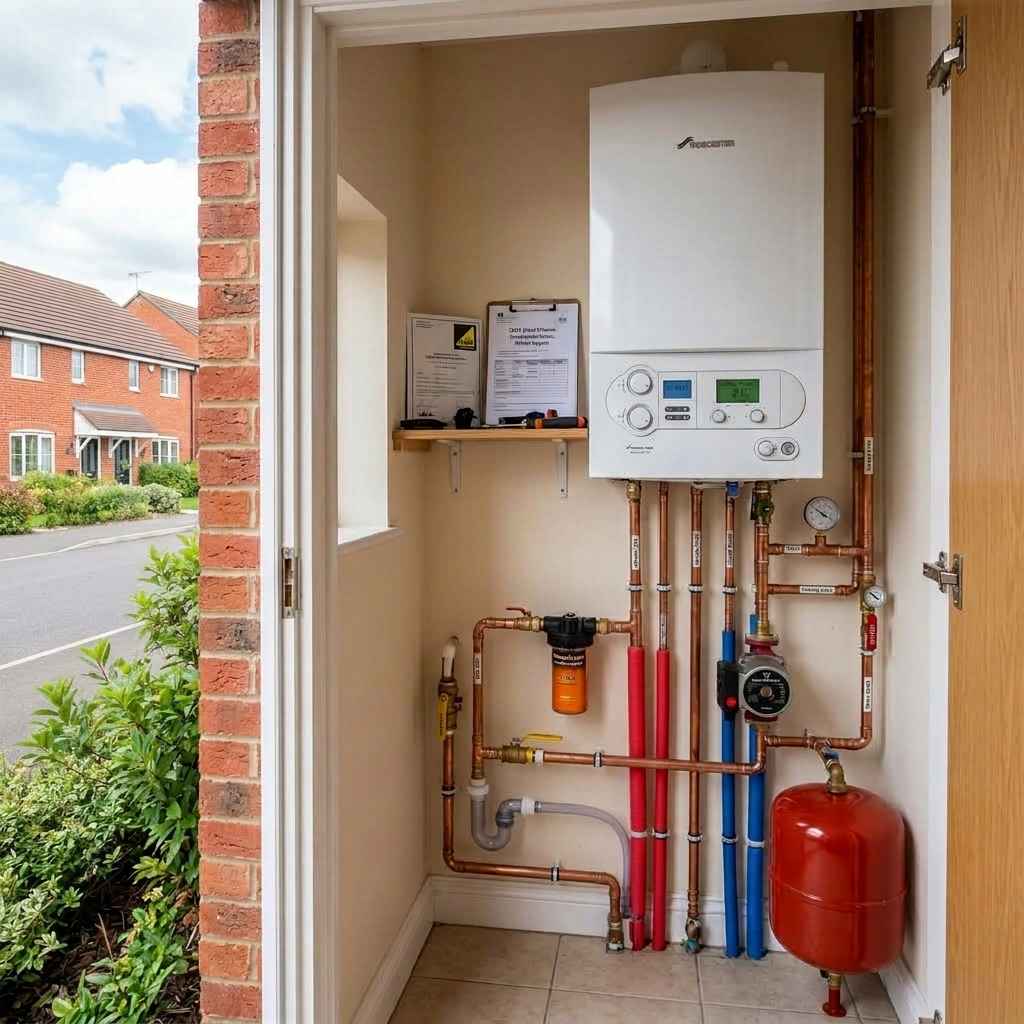
- Boiler type, size and brand.
- Whether the boiler moves to a new location.
- Extras such as smart controls, filters or a system flush.
- The warranty length you choose.
Should you consider a heat pump instead?
It is worth a look before you buy. There is no Boiler Upgrade Scheme grant for a new gas boiler. There is £7,500 towards an air source heat pump. Eligible off-gas grid homes on oil or LPG can get £9,000 until 31 March 2027. For some homes, that makes a heat pump cost close to a boiler. Our air source heat pumps page explains how it works.
A heat pump does not suit every home or budget. We will tell you honestly which option fits yours.
How to make your boiler last longer
- Book a service every year with a Gas Safe engineer.
- Bleed radiators when they feel cold at the top.
- Check the pressure gauge once a month.
- Fit a magnetic filter to catch sludge.
- Deal with small faults early, before they grow.
Frequently asked questions
1. How long should a boiler last?
Most boilers last 10 to 15 years. Annual servicing helps yours reach the upper end.
2. Is it worth repairing a 15-year-old boiler?
Only for a cheap, simple fault. At that age, more faults usually follow. Money spent on big repairs is better put towards a new boiler.
3. How much can a new boiler save on bills?
It depends on what you replace. Swapping an old, inefficient boiler for an A-rated one can cut gas use noticeably. Homes with the oldest boilers save the most.
4. How long does a boiler replacement take?
A like-for-like swap usually takes one day. Moving the boiler or changing the system type can take two to three days.
5. Who can legally fit a gas boiler?
Only a Gas Safe registered engineer. Always check the engineer’s Gas Safe ID card before work starts.
Not sure whether to repair or replace?
Our Gas Safe engineers will inspect your boiler and give you an honest answer. If a repair makes sense, we will repair it. If not, you get a clear fixed quote. Easylife Energy covers Milton Keynes, Bedford, Luton, Aylesbury and nearby towns. See our boiler installation and repair service. Or call 01908 714578.