Home EV Charger Installation: Costs, Grants and What to Expect
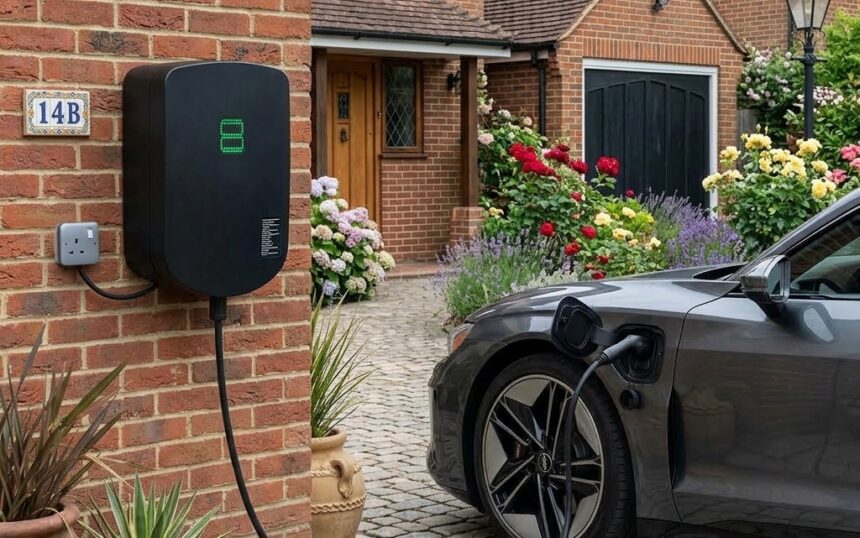
Home EV charger installation is simpler than most drivers expect. A standard 7kW charger costs around £800 to £1,200 fitted. The job usually takes two to four hours. Some households can also claim up to £500 off. This guide covers the costs, the grants and the process.
The short answer
- Typical cost: £800 to £1,200 for a 7kW smart charger, supplied and fitted.
- Grant: up to £500 for renters, flat owners and homes with on-street parking only.
- Time on the day: usually two to four hours.
- Best charger for most homes: a 7kW smart charger.
How much does a home EV charger cost in 2026?
Most UK homes pay between £800 and £1,200. That price covers the charger, the labour and a standard install. Prices can run higher in London and the South East.
| Item | Typical cost |
|---|---|
| 7kW smart charger with standard installation | £800 to £1,200 |
| Consumer unit (fuse board) upgrade, if needed | £400 to £800 extra |
| Long cable runs or groundworks | Quoted after a survey |
What affects the price?
A standard install assumes a short cable run and a modern fuse board. Your quote may rise if:
- The charger sits far from your consumer unit.
- Cable needs to run under a driveway or path.
- Your fuse board is old or has no spare capacity.
- Your main fuse or earthing needs upgrading.
- You choose a premium charger or a tethered cable.
A proper survey spots these early. You should get a fixed price before any work starts. If your electrics are older, an electrical safety check is a sensible first step.
Can you get a grant for a home EV charger?
Yes, if you fit one of these groups. The government EV chargepoint grant pays 75% of the cost, up to £500. It runs until 31 March 2027.
You may qualify if you:
- Rent your home and have private off-street parking.
- Own and live in a flat with private off-street parking.
- Have on-street parking only and can fit a cross-pavement solution.
You will not qualify if you:
- Own a house with a driveway or garage. This group lost grant support in 2022.
You also need an eligible electric or plug-in hybrid vehicle. The grant is claimed through an OZEV-authorised installer, so ask before you book. Landlords have a separate grant, also worth up to £500 per socket.
Which charger speed do you need?
A 7kW charger is right for most homes. It adds roughly 25 to 30 miles of range per hour. That fills most cars overnight.
- 3-pin plug: very slow. Fine as a backup, not for daily use.
- 7kW: the standard choice for single-phase homes.
- 22kW: needs a three-phase supply. Very few UK homes have one.
Tethered or untethered?
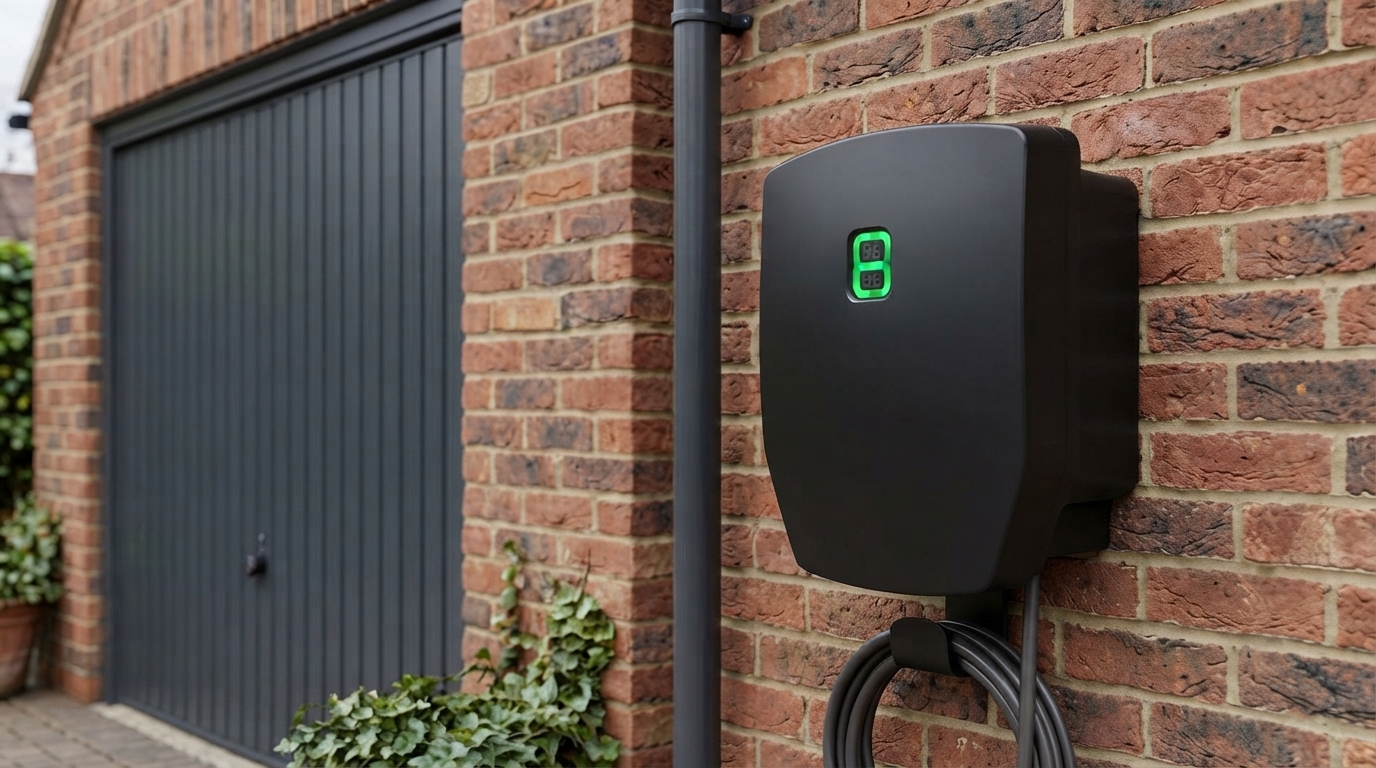
A tethered charger has a cable attached. You just plug in, which is quick and convenient. An untethered charger has a socket only. It looks neater and works with any cable type. Choose tethered for ease. Choose untethered for a tidier wall.
What happens during installation?
- Survey. We check your parking, fuse board and cable route. Often photos are enough.
- Fixed quote. You get a clear price with no hidden extras.
- Network notification. Your installer tells the local network operator about the charger.
- Installation day. The charger is mounted and wired to your consumer unit. Power is off briefly. Most jobs take two to four hours.
- Testing and handover. We test everything and connect the charger to your Wi-Fi. You get the app set up and an electrical certificate.
How much does home charging cost to run?
Far less than public charging. On an off-peak EV tariff, home charging can cost as little as 2p a mile. Smart chargers schedule charging for the cheapest hours automatically. All new home chargers sold in Great Britain must have smart features.
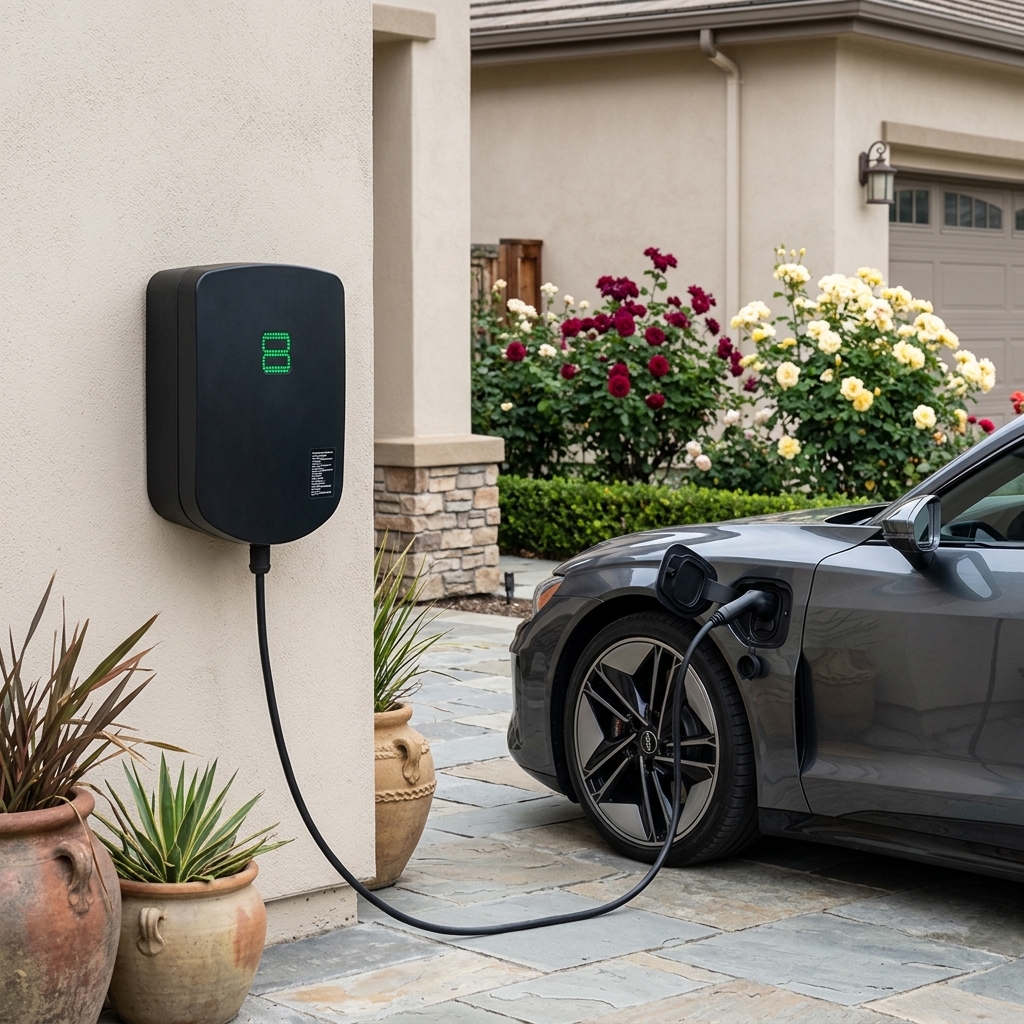
Have solar panels? Many chargers can use your spare solar power to charge the car. Add battery storage and you can store cheap energy too. See our residential solar installation page for details.
Frequently asked questions
1. Do I need planning permission for a home EV charger?
Usually not. Most home chargers fall under permitted development. Listed buildings and some flats may need consent. Renters and leaseholders need the owner’s permission.
2. Can I install an EV charger myself?
No. A qualified electrician must install and certify it. A poor install is a fire risk and can affect your home insurance.
3. How long does installation take?
Most standard installs take two to four hours. Complex jobs with long cable runs can take a full day.
4. Can I get a charger without a driveway?
Possibly. A cross-pavement channel can carry the cable safely from your home. You need council approval first. A grant of up to £500 can help with the charger cost.
5. Will a charger work with any electric car?
Yes, almost always. Nearly all modern EVs use a Type 2 connector. An untethered charger works with any car’s own cable.
Book your EV charger installation
Easylife Energy fits home chargers across Milton Keynes, Bedford, Luton, Aylesbury and nearby towns. You get a fixed quote, a tidy install and proper aftercare. Visit our EV charger installation page. Or call 01908 714578 for a free quote.