How Businesses Can Reduce Carbon Emissions with Solar
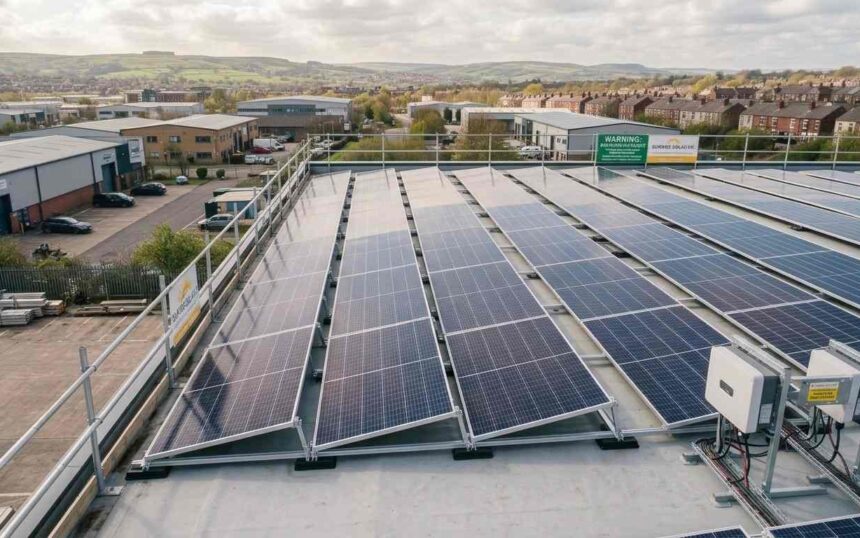
Businesses reduce carbon emissions with solar by generating clean electricity on-site, instead of buying it from a grid still reliant on fossil fuels. Every kWh produced directly replaces a kWh you’d otherwise import. This cuts your Scope 2 emissions, supports net-zero targets, and gives you clear, measurable figures for ESG and sustainability reporting.
Key Takeaways
- Solar directly cuts Scope 2 emissions by replacing grid electricity.
- UK panels typically reach carbon payback within around six years.
- Solar supports net-zero targets more directly than offsetting schemes.
- Energy-intensive sectors can combine solar with Climate Change Agreements for extra savings.
- Lower emissions often bring tender, investor, and supply chain advantages too.
To understand sizing, costs and finance options for your premises, see our full guide to solar PV for businesses.
What Are Scope 2 Emissions, and Why Do They Matter?
Scope 2 emissions come from electricity you buy, not generate yourself. For most commercial premises, this is a major slice of the total carbon footprint.
- Solar directly substitutes grid electricity with clean generation.
- Every kWh generated is a kWh no longer bought from fossil-heavy sources.
- This gives sustainability teams a clear, quantifiable metric for annual reports.
How Much CO2 Can Solar Actually Save?
The numbers add up quickly, even for modest systems.
- A single domestic-scale panel saves over 900 kg of CO2 a year.
- Rooftop solar produces around 12 times less CO2 per kWh than natural gas.
- Compared to coal, that gap widens to around 20 times less.
- A 250 kWp commercial system can offset roughly 40–60 tonnes of CO2 annually, depending on generation and grid mix.
Panels also become “carbon neutral” within a few years, meaning saved emissions outweigh those from manufacturing. In the UK, that payback period is typically around six years. After that, generation is essentially carbon-free for decades.
Why Is Solar One of the Most Effective Options for Businesses?
Solar PV remains one of the most effective technologies for cutting operational emissions. Since much of the UK grid still includes carbon-intensive generation, producing power on-site lowers your footprint immediately, not gradually.
Unlike offsetting schemes, solar delivers a direct, physical reduction. You’re not buying credits. You’re not generating less carbon in the first place.
How Does Solar Support Net-Zero Targets?
Most net-zero strategies rely heavily on cutting Scope 2 emissions, since that’s the area businesses control most directly.
- Assess your current electricity use and its associated emissions.
- Size a solar system matched to your daytime demand.
- Install and commission the system with an MCS-accredited installer.
- Track generation data against grid offset for reporting.
- Report the reduction through SECR, CCA, or voluntary ESG disclosures.
Two-thirds of FTSE 350 companies now hold published net-zero commitments. On-site solar generation is one of the fastest ways to show real progress against them.
Does Solar Help with Climate Change Agreements (CCAs)?
Yes, for energy-intensive sectors. A Climate Change Agreement gives businesses in manufacturing, food and drink, and chemicals a reduced Climate Change Levy rate. This applies in exchange for meeting carbon reduction targets.
On-site solar generation contributes directly to those targets, helping maintain CCL discount eligibility while cutting emissions at the same time.
What Other Business Benefits Come from Cutting Emissions?
Lower emissions rarely stand alone. They tend to bring wider business advantages too.
- Stronger position in B2B tenders requiring proof of sustainability action
- Improved standing with investors assessing ESG performance
- Better relationships with supply chain partners setting their own carbon targets
- A visible, tangible commitment beyond written policy statements
Solar vs Other Carbon Reduction Methods
| Method | Emissions cut | Cost | Payback |
| Rooftop solar PV | Direct, ongoing | £35,000–£150,000 (SME range) | 4–7 years |
| Carbon offsetting | Indirect, external | Ongoing annual cost | No payback (recurring spend) |
| Energy efficiency upgrades | Moderate, ongoing | £5,000–£50,000 | 2–5 years |
| Green energy tariff switch | Indirect (grid-mix based) | Often minimal | N/A |
Solar stands out because it reduces emissions and cuts costs simultaneously, rather than trading one for the other.
Real-World Example: London Tech Office
A London-based commercial office installed rooftop solar alongside on-site EV charging. The system cut annual carbon emissions by 18 tonnes and reduced overall operating expenditure by 22%. It also covered 100% of the power needed for the site’s EV charging bays, extending the emissions benefit beyond the building itself.
Frequently Asked Questions
1. How much CO2 does commercial solar save per year?
A 250 kWp system can offset roughly 40–60 tonnes of CO2 annually, depending on system output and local grid carbon intensity.
2. What’s the difference between Scope 1, 2 and 3 emissions?
Scope 1 covers direct emissions from your operations. Scope 2 covers purchased electricity. Scope 3 covers your wider supply chain. Solar mainly targets Scope 2.
3. Is solar better than carbon offsetting?
Solar cuts emissions directly and reduces bills. Offsetting is an ongoing cost that doesn’t reduce your actual electricity-related emissions.
4. How long until solar panels become carbon neutral?
UK panels typically reach carbon payback within about six years, after which generation is effectively carbon-free.
5. Does solar help with SECR reporting?
Yes. Solar generation data provides clear, verifiable figures for Streamlined Energy and Carbon Reporting requirements.
6. Can solar help my business qualify for a CCA discount?
Yes, for energy-intensive sectors. On-site generation counts toward the carbon reduction targets required to maintain CCL discount eligibility.
7. Do investors care about a business’s carbon footprint?
Increasingly, yes. ESG performance influences investment decisions, tender outcomes, and supply chain partnerships.
8. Is solar still effective in less sunny parts of the UK?
Yes. Modern panels generate efficiently even in diffused light, including in northern and coastal regions.
9. How is solar’s carbon saving actually calculated?
It’s based on the CO2 intensity of grid electricity displaced by your on-site generation, tracked against your annual output.
10. What’s the first step to reducing emissions with solar?
Start with a site survey and electricity usage review, to confirm system size and realistic emissions savings for your premises.