Industries That Benefit Most from Commercial Solar
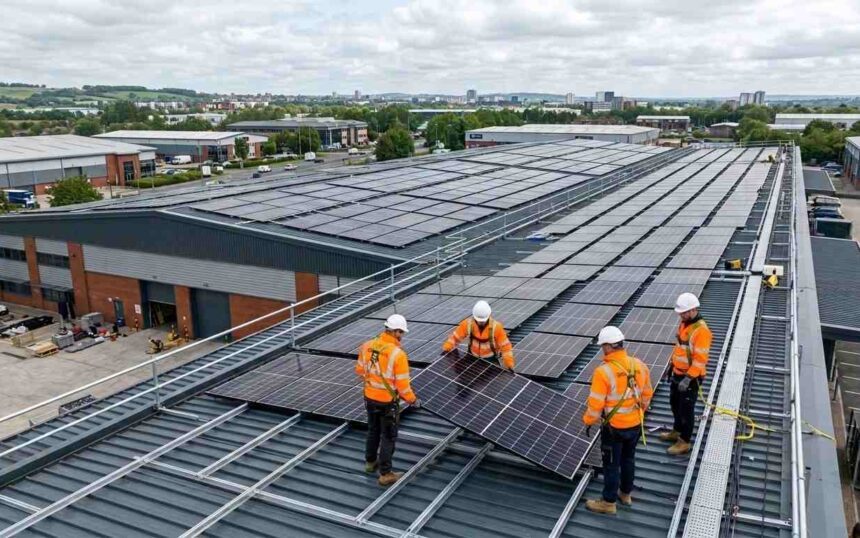
Warehouses, manufacturers, farms, and cold storage sites benefit most from commercial solar. These industries share two traits: large roof space and high daytime electricity use. That combination drives faster payback and stronger long-term savings. Other strong fits include food production, hospitality, and offices with steady daytime demand.
Key Takeaways
- Warehouses, manufacturers, cold storage, and farms see the fastest solar returns.
- High daytime electricity use is the biggest driver of savings.
- Continuous operations, like refrigeration, achieve the strongest self-consumption rates.
- Smaller daytime-use businesses still benefit, just at a slower payback.
- A site-specific survey is the only reliable way to confirm your numbers.
If your business fits any of these profiles, our guide to solar PV for businesses covers sizing, costs, and finance in more detail.
Why Does Industry Type Affect Solar Returns?
Solar pays best when you use most of what you generate. Businesses running machinery, refrigeration, or lighting during daylight hours get the biggest wins.
Two factors decide your return:
- Roof or land space — more space means a bigger, more efficient system.
- Daytime energy use — using power as you generate it beats exporting it.
Industries strong in both areas see payback in four to six years.
Which Industries Benefit Most from Commercial Solar?
a. Warehouses and Logistics
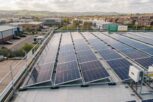
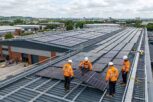
Warehouses often have vast, unshaded rooftops. That space is usually going to waste otherwise.
- Large, flat roofs suit low-cost ballast-mounted panels.
- Daytime operations mean high self-consumption.
- Typical systems range from 100 kWp to 1 MWp, with payback around five to six years.
b. Manufacturing and Factories
Factories run heavy machinery during the day, exactly when solar generates most.
- High daytime electrical demand matches solar output closely.
- Welding, CNC, moulding and press-line loads all offset well.
- Some manufacturers can stack government IETF grants with tax relief, cutting costs further.
c. Cold Storage and Refrigerated Warehouses
Refrigeration never stops. That constant baseload is ideal for solar.
- Round-the-clock demand can push self-consumption to 90–95%.
- Systems typically run 250 kWp to 1 MWp.
- Payback often lands under five years, before tax relief.
d. Agriculture and Farms
Farms combine two solar-friendly assets: barn roofs and open land.
- Refrigeration, irrigation and lighting all draw steady power.
- Agrivoltaics lets farmers grow crops beneath panels, keeping fields productive.
- Solar exports can become a genuine new income stream.
e. Food and Drink Production
Food manufacturers face two pressures: high energy bills and refrigeration loads.
- Bottling lines, mash-tuns and processing equipment run continuously.
- Retailers increasingly demand sustainability credentials from suppliers.
- Battery storage pairs well here, smoothing out variable production shifts.
f. Offices and Retail
Smaller daytime-use businesses still benefit, just at a smaller scale.
- Staffed offices with regular hours see solid self-consumption.
- Retail units with daytime trading hours offset lighting and equipment costs.
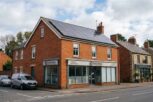
- Smaller systems (10–50 kWp) suit most standalone premises.
g. Hospitality
Hotels run around the clock, which suits solar well.
- Laundry, kitchens and heating create a steady baseload.
- ESG reporting from booking platforms is accelerating uptake.
- Battery storage extends solar use into evening peak hours.
Industry Comparison: Typical Fit for Commercial Solar
| Industry | Typical system size | Self-consumption | Typical payback |
| Cold storage | 250 kWp–1 MWp | 90–95% | 4.5–5.5 years |
| Warehousing/logistics | 100 kWp–1 MWp | 70–85% | 5–6 years |
| Manufacturing | 250 kWp–2 MWp | 65–80% | 5–6 years |
| Agriculture | 30 kWp–500 kWp | 50–70% | 5–8 years |
| Offices/retail | 10 kWp–100 kWp | 55–70% | 5–7 years |
| Hospitality | 50 kWp–500 kWp | 70–85% | 5–6 years |
Real-World Example: Refrigerated Warehouse
A mid-size cold storage site running 24/7 refrigeration installed a 300 kWp rooftop system. Continuous demand meant almost all generated power was used on-site immediately. With Annual Investment Allowance relief applied, the business reached payback in under five years, well ahead of typical daytime-only sites.
Which Businesses Are Less Suited to Solar?
Not every business gets the same return. Weaker fits include:
- Premises used mainly evenings or weekends
- Small units with heavily shaded or limited roof space
- Sites with unstable or ageing roof structures needing costly upgrades first
A proper site survey clarifies whether your business falls into this category.
Frequently Asked Questions
1. What industry benefits most from commercial solar?
Cold storage and refrigerated warehouses typically see the strongest returns, thanks to constant 24/7 electricity demand matching solar generation closely.
2. Do farms benefit from commercial solar?
Yes. Farms have ample barn roof and land space, plus steady demand from refrigeration, irrigation and processing equipment.
3. Is commercial solar worth it for a small office?
Yes, though returns are typically slower than industrial sites. Offices with regular daytime hours still see solid five-to-seven-year payback.
4. Can hotels benefit from solar panels?
Yes. Round-the-clock demand from laundry, kitchens and heating creates a strong baseload that solar and battery storage can offset well.
5. Why does daytime electricity use matter so much for solar?
Power used immediately saves the full retail rate. Exported power earns a lower rate, so daytime users get better returns.
6. What’s the best roof type for commercial solar?
Large, flat, unshaded roofs are ideal. Warehouses and factories often have exactly this, making installation simpler and cheaper.
7. Do manufacturers get extra financial support for solar?
Some qualify for Industrial Energy Transformation Fund (IETF) grants, which can be combined with standard tax relief for bigger savings.
8. How does battery storage help industries with solar?
Batteries store excess daytime generation for use later, useful for businesses like hospitality with evening or overnight demand.
9. Are cold storage facilities really that well suited to solar?
Yes. Continuous refrigeration means self-consumption rates of 90% or higher, among the best of any commercial sector.
10. How do I find out if my industry is a good fit?
A site survey reviewing your roof, electricity usage pattern and operating hours gives a clear, tailored answer.