
The Commercial Solar Installation Process: From Survey to Switch-On
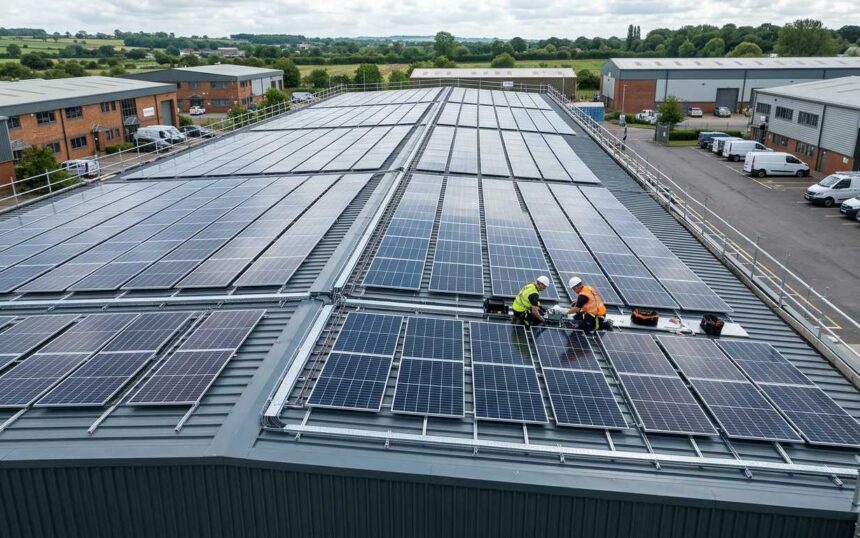
Quick answer: A commercial solar installation follows seven steps. Site survey, energy analysis, system design, permissions, grid approval, installation and commissioning. Most rooftop projects take two to four months from survey to switch-on. The work on site often takes days, not weeks. Grid approval from your network operator is usually the longest wait.
Key takeaways
- The survey and your energy data shape the whole design.
- Most business rooftop solar does not need planning permission.
- Systems above about 11kW on three-phase need G99 approval first.
- Your network operator has up to 45 working days to respond.
- You should receive certificates, warranties and monitoring access at handover.
Step 1: The site survey
Every good project starts on site. An engineer visits your premises and checks the basics.
- Roof type, condition, pitch and direction.
- Shading from nearby buildings, trees or rooftop plant.
- Safe access for scaffolding and materials.
- Your electrical intake, meter and distribution boards.
- Space for inverters, isolators and any future battery.
An old roof is worth flagging now. Panels last 25 years or more. It is cheaper to repair a roof before installation than after.
Step 2: Energy use analysis
Next, we look at how your site uses power. Half-hourly data from your supplier is ideal. It shows exactly when you use electricity.
This matters because savings come from using your own power. Solar you use on site replaces grid electricity at full price. Solar you export earns much less through the Smart Export Guarantee.
So the best system matches your daytime demand. Bigger is not always better.
Step 3: System design
Good commercial solar PV design balances output, cost and roof limits. The design covers several areas.
- Panel layout. Placement that avoids shade and keeps safe access routes.
- Inverter sizing. Matched to the array and your supply.
- String design. How panels connect, so one shaded area doesn’t drag down the rest.
- Yield forecast. Expected generation each month and year.
- Structural check. Confirms the roof can carry the extra load.
- Battery option. Whether storage makes sense now or later.
You should then receive a clear quote. It should show system size, expected output, savings and payback.
Step 4: Planning and permissions
Most business rooftop systems fall under permitted development. In December 2023, the government removed the old 1MW limit for non-domestic rooftops. Read the government announcement.
Some conditions still apply. You may need planning permission for commercial solar in these cases:
- The building is listed.
- The site is in a conservation area.
- The panels sit on a wall facing a road in a protected area.
- The design goes beyond permitted development limits.
If you lease your building, get written consent from your landlord early. It avoids delays later on.
Step 5: Grid approval (G98 or G99)
Your local network operator, called the DNO, must know about your system. The process depends on system size.
| Route | Applies to | What happens |
|---|---|---|
| G98 | Up to 16A per phase. Roughly 3.68kW single-phase or 11kW three-phase. | Install first, then notify the DNO. |
| G99 | Anything above 16A per phase. Most commercial systems. | Apply and get approval before installation. |
For a G99 application, the DNO has up to 45 working days to respond. The clock only starts once the application is complete. Missing details restart it.
Sometimes the local grid has limited capacity. The DNO may then approve the system with an export limit. A battery can help here. It stores power that would otherwise be wasted.
Step 6: Installation
This is the quickest stage. Most rooftop systems take a few days to two weeks on site.
The team sets up scaffolding or edge protection first. Then they fit mounting rails, panels and cabling. Inverters and isolators go in next.
Disruption is usually low. Most work happens on the roof. The final connection needs a short power-down. We plan that around your opening hours.
Step 7: Commissioning and handover
Before switch-on, every circuit is tested. The system is then commissioned and the DNO is notified.
At handover, you should receive:
- Electrical test certificates.
- An MCS certificate, where applicable.
- Panel, inverter and workmanship warranties.
- Access to your monitoring app or portal.
- An operation and maintenance guide.
Keep these documents safe. You will need them for export payments, insurance and future servicing. Our commercial solar panel maintenance guide explains what happens next.
How long does commercial solar installation take?
Here is a typical timeline for a rooftop project.
| Stage | Typical time |
|---|---|
| Site survey | Half a day to one day |
| Energy analysis, design and quote | One to two weeks |
| Planning checks | Usually quick. Longer if consent is needed. |
| G99 grid approval | Up to 45 working days |
| Installation | A few days to two weeks |
| Commissioning and handover | One to two days |
Ground-mounted and very large systems take longer. Planning and grid work are more involved.
Tax and VAT points to check
Commercial solar carries standard-rate VAT at 20%. VAT-registered businesses can usually reclaim it.
Solar panels may also qualify for capital allowances. These include the Annual Investment Allowance. Rules depend on your business structure, so speak to your accountant.
Want to see the returns first? Read is commercial solar worth it for small businesses. Or see which industries benefit most.
Start with a free site survey
Easylife Energy has installed solar since 2016. We are MCS-certified through NICEIC and a RECC code member. One team handles survey, design, DNO paperwork and installation.
Find out more about our commercial solar installation service. Or book your free survey on 01908 714578.
Frequently asked questions
Do I need planning permission for commercial solar panels?
Usually not. Most business rooftop systems are permitted development, and the 1MW limit was removed in 2023. Listed buildings and conservation areas may still need consent.
What is a G99 application?
It is a request to your network operator to connect a larger system. It applies above 16A per phase. Approval is needed before installation.
How long does a commercial solar installation take?
Most projects take two to four months from survey to switch-on. The on-site work usually takes a few days to two weeks.
Can I install solar on a leased building?
Yes, with your landlord’s written consent. Agree who owns the system and who maintains it before work starts.
Will installation disrupt my business?
Very little. Most work takes place on the roof. A short power-down is needed for the final connection, planned around your hours.
Commercial Battery Storage: Is It Worth It With Solar?
October 26, 2026[…] our battery storage and commercial solar installation services. New to solar? Our commercial solar installation process guide explains each […]
Commercial Solar Panel Maintenance Guide | Easylife Energy
October 26, 2026[…] Planning a new system? See our commercial solar installation service. Not sure solar adds up yet? Read is commercial solar worth it for small businesses. […]