Commercial Solar Panel Maintenance: A Practical Guide for UK Businesses
Last updated: October 2026
Quick answer: Commercial solar panels need little upkeep, but not zero. Check your monitoring data every month. Book an inspection and electrical test once a year. Clean the panels when dirt or bird mess builds up. Plan to replace the inverter around years 10 to 15. Regular care protects your output, your savings and your warranty.
Key takeaways
- Review monitoring data monthly. It is the fastest way to spot a fault.
- Book a professional inspection and electrical test every year.
- Most UK sites need one clean a year. Flat or dusty roofs may need two.
- Inverters are the most common failure point. Budget for one replacement.
- Roof and electrical work needs an MCS-certified, NICEIC-registered engineer.
Why does commercial solar need maintenance?
A commercial array is an electrical asset on your roof. It sits outside in all weathers, all year round. Small problems build up quietly over time.
A tripped string or loose connector won’t warn you. The lights stay on because the grid fills the gap. You only notice when your energy bill creeps up.
Bigger systems also have more parts. More panels mean more connectors. More strings mean more points of failure. A 3% loss sounds small. Across a large array and a full year, it adds up fast.
Good records matter too. Many panel and inverter warranties expect proper care. Some insurers ask for inspection reports as well.
What does a commercial solar maintenance visit include?
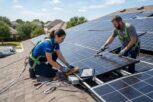
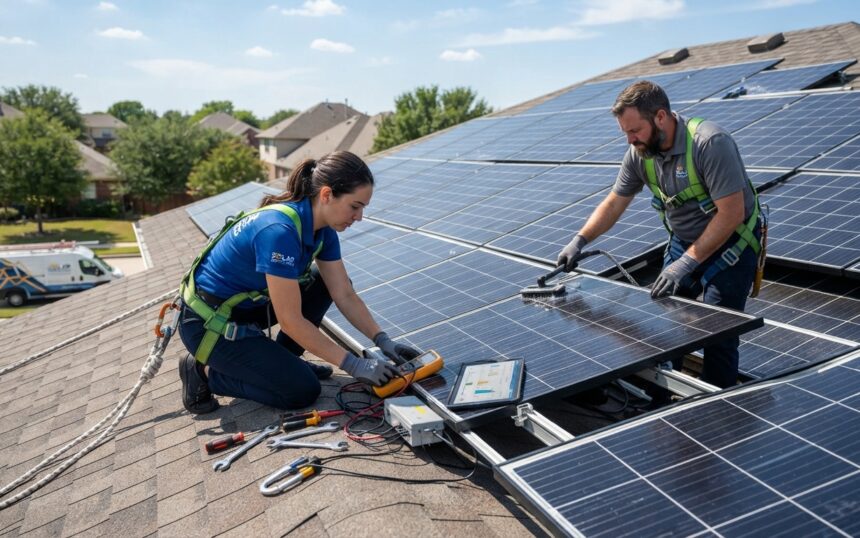
A proper solar PV maintenance visit covers the roof, the electrics and the data. Here is what a typical service checks.
| Task | What it checks | How often |
|---|---|---|
| Monitoring review | Actual output against expected yield | Monthly |
| Visual roof inspection | Cracked glass, loose fixings, debris, new shading | Yearly |
| Electrical testing | DC strings, insulation resistance, earthing, polarity | Yearly, with fuller testing every few years |
| Thermal imaging | Hot spots in cells, connectors and junction boxes | Yearly, or after an output drop |
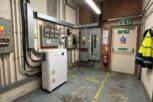
| Inverter check | Error logs, fans, ventilation, firmware | Yearly |
| Isolators and cabling | Water ingress, UV wear, rodent damage | Yearly |
| Panel cleaning | Dirt, lichen, moss and bird droppings | Usually yearly |
After each visit, you should get a written report. Keep it with your warranty documents.
How often should commercial solar panels be cleaned?
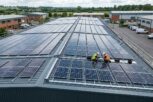
For most UK businesses, once a year is enough. Rain does much of the work on pitched roofs. Flat and low-pitch arrays are different. Dirt sits on the glass and dries in place.
Location matters as well. Sites near farms, quarries, busy roads or industrial units collect more dust. These may need solar panel cleaning twice a year.
Bird droppings are the biggest problem. They block whole cells, not just a thin layer. Over time, they can cause hot spots and permanent damage.
Use purified water and soft brushes. Never use pressure washers or harsh chemicals. They can damage seals and anti-reflective coatings. Roof work also needs proper safety planning, so leave it to a trained team.
What are the most common commercial solar faults?
Most faults are simple to fix once found. The trick is finding them early.
- Inverter faults. The most common failure. Look for error codes or shutdowns.
- Connector and cable damage. Loose connectors, water ingress or chewed cables.
- New shading. A new building, rooftop plant or tree growth.
- Hot spots. Caused by cracked cells, heavy soiling or failed diodes.
- Isolator failure. Rooftop DC isolators can let water in over time.
- Monitoring dropouts. A lost Wi-Fi link hides every other fault.
The panels themselves rarely fail. Quality panels usually carry a 25-year performance warranty. Modern panels lose around 0.5% of their output each year. That is normal wear, not a fault.
If something does go wrong, book commercial solar panel repair quickly. Every sunny day offline is lost generation you can’t get back.
How long do solar inverters last?
Most inverters last 10 to 15 years. Panels often last 25 years or more. So expect at least one solar inverter replacement during the system’s life.
Inverters work hard every daylight hour. They turn DC power from the panels into AC power for your site. Heat is their main enemy.
Keep them cool and well ventilated. Don’t stack boxes or stock around them. Check fans and filters every year. A recurring fault code is an early warning sign.
Planning ahead turns a breakdown into a budgeted upgrade. It is also a good moment to fit a hybrid inverter. That makes it easy to add battery storage later.
Monitoring: your first line of defence
Most systems come with an app or web portal. Use it. It costs nothing and catches most problems first.
- Compare this month’s output with the same month last year.
- Treat a sudden drop on a sunny day as a red flag.
- A slow decline often points to dirt or new shading.
- Switch on email or app alerts if your platform offers them.
- Ask your engineer to review the data at each service.
How much does commercial solar maintenance cost?
Costs depend on system size, roof access and the level of cover. A basic yearly service on a smaller system usually costs a few hundred pounds. Larger arrays with active monitoring and fast call-out cover cost more.
Access is often the biggest variable. Scaffolding, edge protection or a cherry picker adds to the price.
Now compare that with lost generation. One failed inverter, unnoticed through a summer, can cost more than several years of servicing. A fixed annual price also makes budgeting simple.
Can you maintain commercial solar panels yourself?
Partly. You can check the monitoring data. You can spot obvious debris or shading from the ground.
Anything on the roof or inside the electrics needs a qualified engineer. Commercial systems run at high DC voltages. DC arcs are dangerous and hard to put out. Always use an MCS-certified installer registered with NICEIC.
Keep your system earning for 25 years
Easylife Energy has worked on solar systems since 2016. Our engineers are MCS-certified through NICEIC. We cover Bedfordshire, Buckinghamshire, Hertfordshire, Northamptonshire and Oxfordshire.
Planning a new system? See our commercial solar installation service. Not sure solar adds up yet? Read is commercial solar worth it for small businesses.
To book a service or inspection, contact our team or call 01908 714578.
Frequently asked questions
How often should commercial solar panels be serviced?
Once a year. A yearly service should include a visual inspection, electrical testing and an inverter check. Review your monitoring data monthly between visits.
Do solar panels need cleaning in the UK?
Yes, but not often. Most sites need one clean a year. Flat roofs and dusty or rural sites may need two. Use purified water and soft brushes only.
How long do commercial solar panels last?
Quality panels last 25 to 30 years or more. They lose around 0.5% of output each year. Inverters usually need replacing after 10 to 15 years.
What is the most common solar PV fault?
Inverter faults are the most common. Other frequent issues include loose connectors, water in isolators, new shading and lost monitoring connections.
Does skipping maintenance affect my warranty?
It can. Some manufacturers and insurers expect regular servicing. Keep written reports from every visit to protect your cover.